The Vaal gave us another performance this week and half of South Africa went into opera-mode again. High notes, gasps, prophecies, panic, experts, pseudo experts, and the usual chorus of “I told you so”. Meanwhile the river just flowed past, lifted a few lawns, kissed the concrete, and carried on like a lady who has seen far worse.
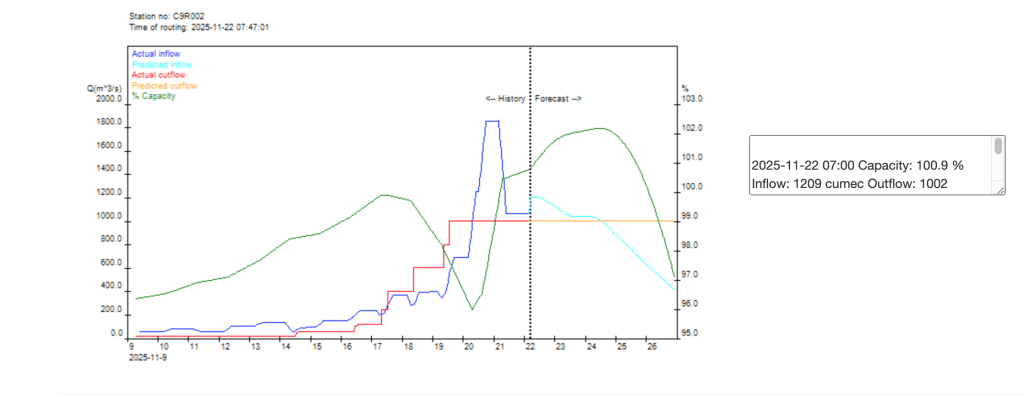
What a week on the river. The Vaal cleared her throat and we all leaned forward like seasoned theatre goers. Eight sluice gates up top, a thousand cubes from Bloemhof, and the Barrage puffing at over fourteen hundred. And what did we get here at Riverbend? A gentle foot massage from Mother Nature and a reminder to move the garden chairs.
We watched the graphs, the WhatsApp voice notes, the experts, the non-experts, the prophets, the panic artists, and the keyboard hydro engineers. Meanwhile the river just rolled along and did exactly what the numbers said it would do.
Our new additions at Riverbend got their baptism too. The lawns had a sip. The willows dipped their hair. The concrete pads got a shine. Not a bolt loose. Not a brick out of line. Even the fish seemed impressed.
And now, as the Vaal Dam prepares to close four gates over the weekend, we take a breath, smile, and say thank you to all the conductors of this orchestra, whether they sit in control rooms or camp chairs. No drama, no heroics, just a beautiful river doing what rivers have done long before Facebook discovered them.
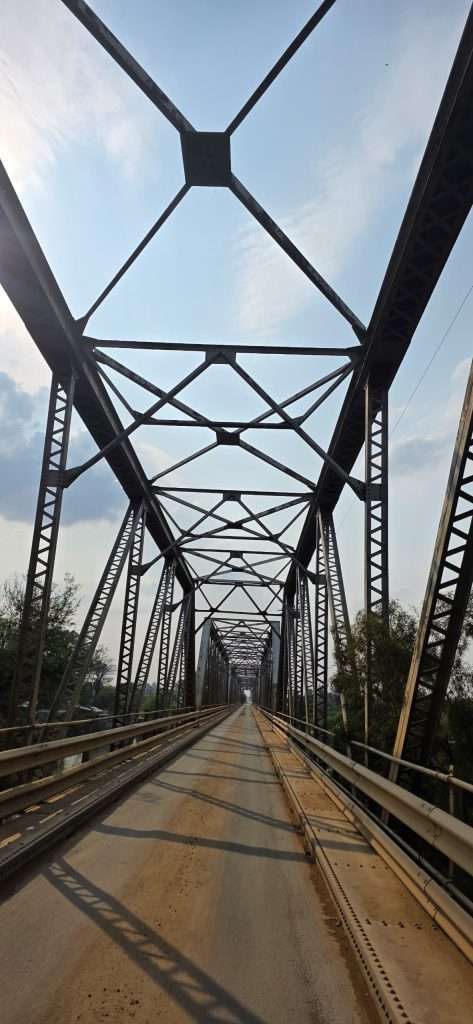
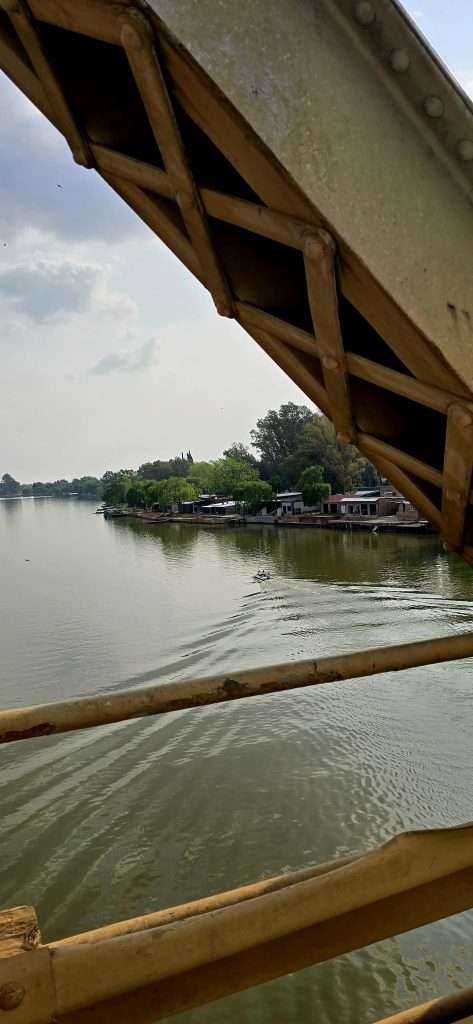
If you stand on the old steel bridge at Christiana today and look down the Vaal, you are not just staring at water. You are staring into history. That bridge cost a fortune to build. It was hammered together in the age of diamonds, when this quiet town pulsed like a heart pumping wealth straight out of the muddy gravel beds.
It all started far from here. In 1867, a fifteen-year-old boy, Erasmus Jacobs, bent down on his father’s farm near Hopetown and picked up a glittering pebble. He thought it was nothing, but it turned out to be a 21 carat diamond. That little pebble cracked South Africa open. Schalk van Niekerk, a farmer with a sharper eye, pushed that stone to the right hands and confirmed what everyone now knows. Suddenly, the rivers were swarmed. The Orange. The Vaal. Men streamed from all corners of the globe, chasing fortune in the mud.
The Vaal River banks became a madhouse of diggers. Tswana and Griqua, Dutch, English, Germans, adventurers with nothing to their name but a spade and hunger in their eyes. They scratched at the gravel, sieved mud, built tents that flapped in the wind, and drank cheap liquor by the fire. Fortunes were made in a day and lost the same night. By the time Christiana was formally founded in 1870, the Vaal was already echoing with shouts, curses, and the clang of tin plates. Where Riverbend stands today, diggers once slept on hard ground, gambling and scheming with the same fever that made this town possible.
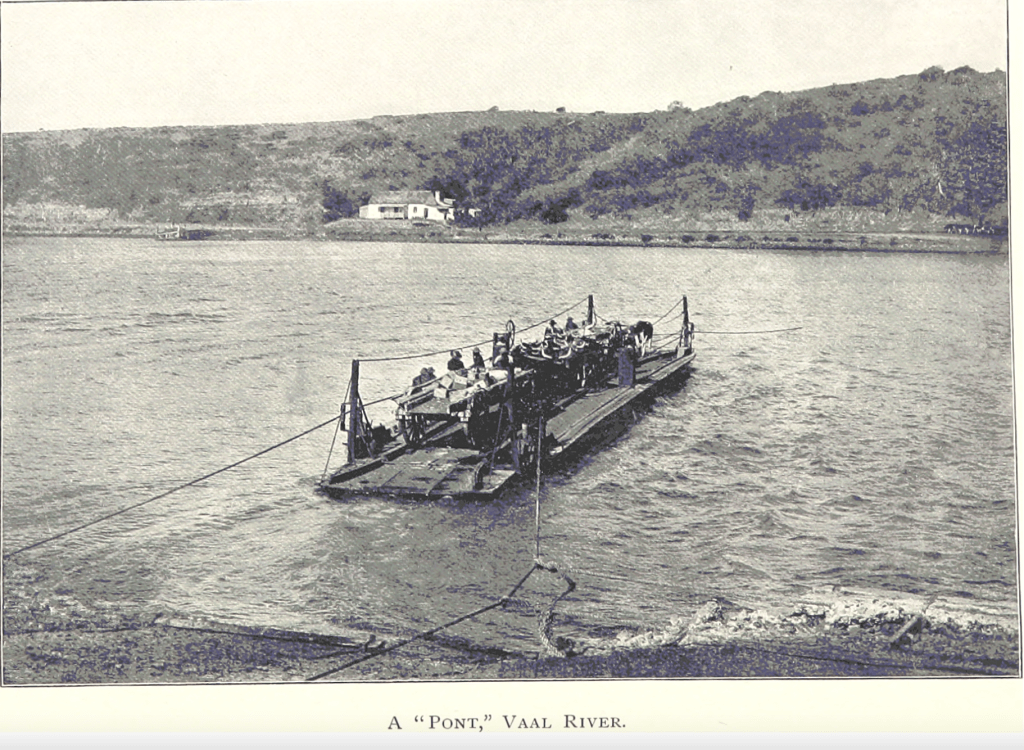
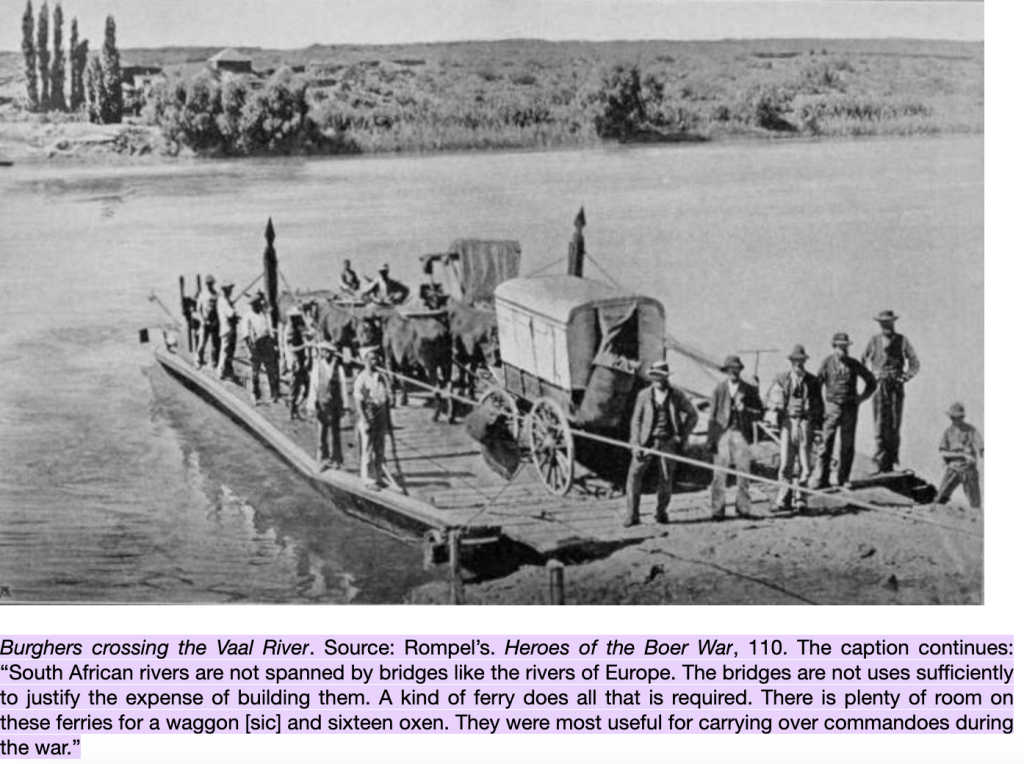
And then came the bridge (1891 – 1892). To move wagons, ore, oxen, and food across a river as temperamental as the Vaal, you needed more than a ferry. So they built. Steel trusses, rivets, stone piers driven into the riverbed. A backbone of iron that tied Christiana to the world beyond. It cost a fortune, but it was a promise. Christiana would not fade into the dust.
But history is never quiet for long. By 1899, war rolled over the land. The Anglo-Boer War turned every bridge into a battlefield prize. Rail lines and crossings were lifelines, and generals knew it. The bridge at Fourteen Streams was blown apart in a thunder of smoke and iron to slow the British. At Christiana, the story took a different turn.
In May 1900, 8 years after the newly built bridge, General Hunter’s Division moved in. Among them, the 2nd Battalion of the Royal Irish Fusiliers. Hardened men, veterans of dusty campaigns, now advancing along the north bank of the Vaal. That night, they bivouacked under a dull moon, fires choked to embers, rifles cleaned, bayonets fixed. Orders passed in whispers. Scouts slipped ahead, finding paths through thorn and drift. Every bootstep on gravel was a heartbeat.
At 4:30 in the morning, two companies of the Irish Fusiliers crept onto the bridge. Wood creaked. Steel joints groaned. Men froze, listening. Only an owl and the churn of water below. They edged forward, khaki shadows sliding over iron ribs, rifles held tight.
By the first light of dawn, they reached the heart of town. The Landdrost, Christiana’s magistrate, stirred in his bed. Roosters crowed. A pale glow lifted over the rooftops. He stepped out onto his stoep, stretching at the morning chill, perhaps believing it would be another ordinary day. And there they were. A line of khaki uniforms, the Royal Irish Fusiliers standing silent in the street, bayonets gleaming in the half light. An officer’s voice rang clear, calm, and final. This town must surrender! The Landdrost froze, then nodded. Christiana, the first Transvaal town to fall, surrendered without a shot. The Union Jack rose over the courthouse as the river murmured below.
Decades later, long after the cannons rusted silent, I arrived in Christiana in 1982. By then, it was a proud little town, polished to the bone. Money showed in its gardens and its pride. But for me, Christiana meant water. The Vaal was alive, the bridge stood tall, and on its banks the Christiana Boat Club thrived. That very site is today Riverbend.
In those days, we hosted national ski competitions right here. I represented South West Africa. We were young, stubborn, and disciplined on the water. The rules were strict. Form, timing, precision. But once you left the waterline, the youth came out. Careless, full of life, and stupid in the best way. Coaches barked at us about our appearance, about focus, about not wasting our talent. We nodded like saints and misbehaved like devils.
The best part came after competitions. The medals tucked away, the adrenaline still boiling, we would look up at that bridge. A monster of steel, stretching across the Vaal like a dare. We climbed it, higher and higher, until the beams cut the sky. Then came the ritual. The dive. Seven metres deep water waited below. You jumped, from ten, sometimes twelve meters high, screaming like warriors going into battle. Thumb of one hand, jammed into your fist of the other, swallow diving like heroes. Get it wrong, and the river punished you. Your ears rang like a rifle shot, your skull throbbed for days. Get it right, and you broke the surface like a torpedo, victorious, roaring to your friends above.
And the feet. If you jumped flat footed, the pain shot up your legs like fire. It felt like the river itself slapped you for stupidity. We laughed until our ribs ached, daring each other to go again, taunting the ones who froze halfway up the climb. Afrikaner humour at its finest. Brutal, honest, and side splitting. You could not buy that kind of laughter.
That is Christiana. Diamonds and fever. War and surrender. Water and wild youth. A bridge that carried fortune hunters, soldiers, and reckless boys chasing dawn. Now Riverbend writes its own lines into these banks, where mud once swallowed blood and laughter. The Vaal holds it all, and one day, when another century has passed, someone will ask what Riverbend left behind…. Then the river will answer in its own time.
Beneath his branches, weary travelers have rested, fishermen have dreamed, and campers have listened to his rustling leaves tell the secrets of the Vaal. And now, a young warrior stands beside him, Voetsoldaat Vloedvas, a sapling born of his strength. But still, the old one remains, his shadow long, his wisdom deep.
When the Fish Eagle cries and the river swells, listen carefully… You might just hear the voice of Ou Oewerwagter, murmuring the old songs of water, wind, and time.
But the river does not care for gentle beginnings. Before he could settle, before he could stretch towards the sky, the flood came. The waters swallowed him whole, submerging him for seven relentless days. The river tested him, but he did not break.
When the floodwaters receded, he stood, baptized by the storm, named by the trial. He had not just survived; he had earned his place.
Now, he grows beside his ancestor, his roots deepening, his branches reaching. He is young, but he is not weak. He is Voetsoldaat Vloedvas, a soldier of the flood, a survivor of the storm.
He wasn’t always this powerful. A few years ago, he was just another young tree standing in the shadow of Ou Oewerwagter. But Don had ambition. He grew fast, spreading his branches wide, learning the tricks of the trade, how to bend with the wind, how to keep his roots deep, and most importantly… how to make deals.
Here, under his shade, campers shake hands over an extra braaibroodjie, whisper about the best fishing spots, and settle old bets with a friendly drink. If you need a bit of shade, he’s got you covered. If you need a quiet place to talk business, Don listens… but he never repeats what he hears.
By afternoon, his shadow stretches over Brooder Shade, a welcome retreat from the sun. By night, the firelight flickers beneath his branches, and if you listen carefully, you might just hear the wind laughing through his leaves, because Don Skadario knows every deal made here… and he approves.”
As two old Weeping Willows near the end of their time, these young giants step in, their roots taking hold where the past fades. Nature always finds a way.
The next time you sit beneath their branches, remember, sometimes, the best things in life come from unexpected places… even bird poop.”